
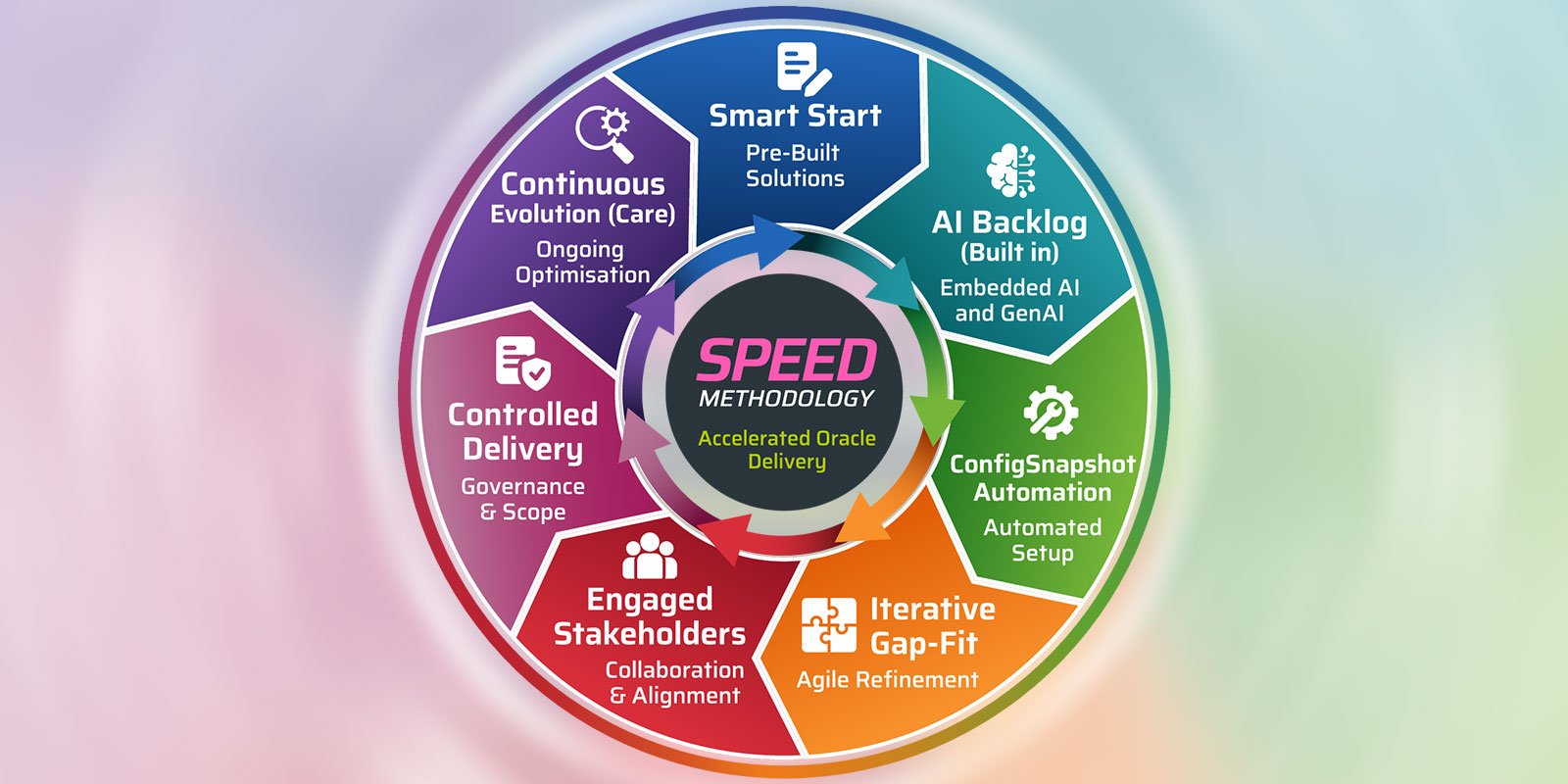
SPEED Methodology — Summary
SPEED is Sarrisco’s modern Oracle Fusion Cloud delivery methodology designed to deliver up to 50% faster time-to-value with lower risk and predictable outcomes. It combines pre-engineered Oracle solution sets, AI built into the delivery lifecycle, and configuration automation via ConfigSnapshot.
At its core, SPEED shifts Oracle delivery from long, bespoke programmes to a structured, repeatable, and insight-driven approach that delivers value from day one.
How SPEED Works
SPEED is both a methodology and a toolkit, built around seven integrated pillars:
- Smart Start
Pre-built Oracle solution sets, templates, and questionnaires accelerate discovery and eliminate lengthy workshops. - AI Backlog (Built-In)
AI use cases are identified early from real business problems and delivered incrementally as part of the core programme, not as a separate AI initiative. - ConfigSnapshot Automation
Automated configuration setup, refresh, and delta management keeps all environments aligned, reduces manual effort, and cuts refresh cycles from weeks to days. - Iterative Gap-Fit
Early engagement with working solutions enables rapid refinement, faster decisions, and accelerated delivery. - Engaged Stakeholders
A collaborative delivery model ensures alignment, transparency, and strong business ownership. - Controlled Delivery
Embedded governance, clear scope, and proven artefacts reduce risk, overruns, and scope creep. - Continuous Evolution (CARE)
Post-go-live optimisation, health checks, and ongoing AI delivery ensure sustained value beyond go-live.
Why SPEED Is Different
- AI is embedded from the start, not bolted on later
- Configuration automation replaces manual setup and rework
- Oracle Best Practices are engineered into delivery
- Focuses on speed to scale, not just speed to go-live
- Designed for predictable outcomes, not heroic effort
The SPEED Outcome
SPEED enables organisations to transform faster, reduce delivery risk, optimise investment, and continuously improve their Oracle Fusion Cloud platform long after go-live.
Explore our Fusion and EBS AI approach